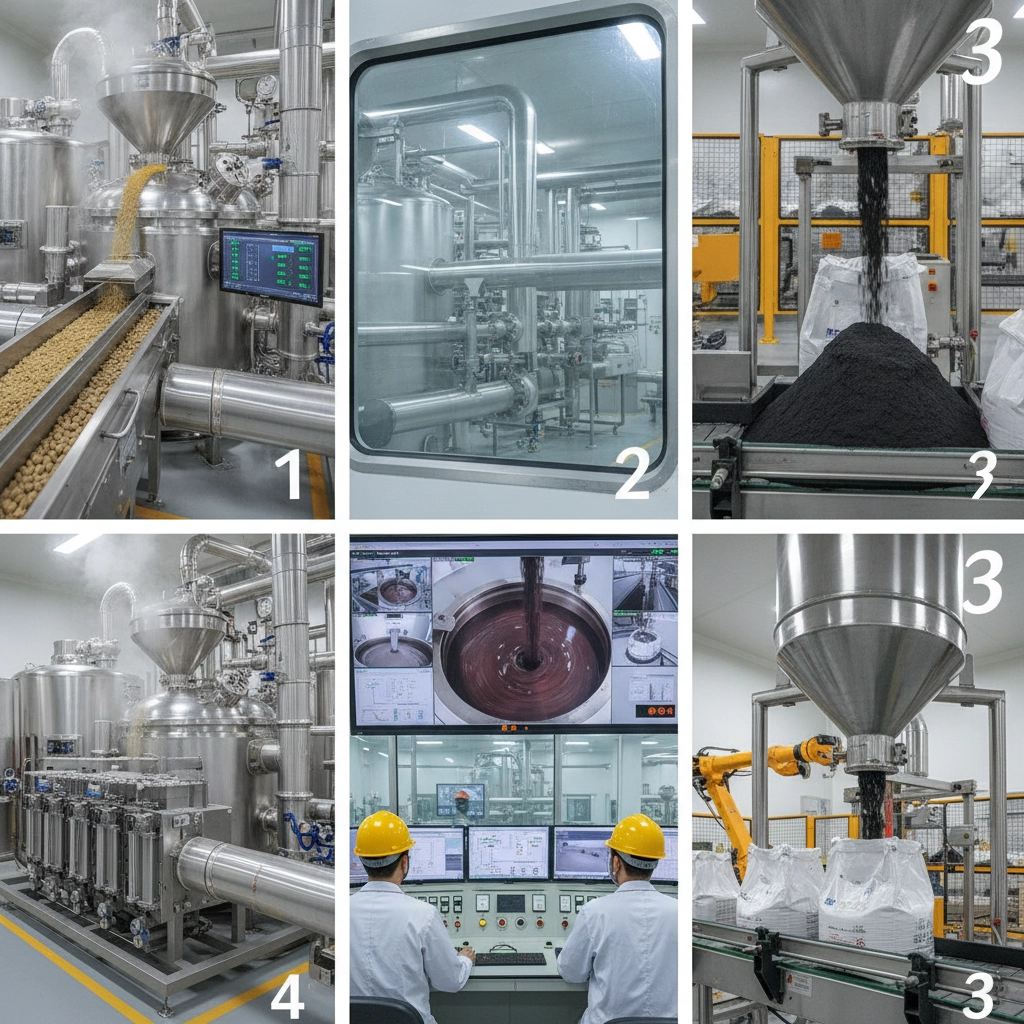
Exogenous Enzymes in Poultry Nutrition – Boosting Feed Efficiency and Sustainability
Exogenous Enzymes in Poultry Nutrition – Boosting Feed Efficiency and Sustainability
Exogenous Enzymes in Poultry Nutrition: Unlocking Efficiency and Sustainability
When delving into poultry nutrition, you often hear about exogenous enzymes — but what are they exactly, and why should they matter beyond the feed mill? Globally, poultry production continues to soar, underpinning food security for millions. Yet, traditional feed ingredients come with challenges like poor digestibility and environmental concerns. Exogenous enzymes in poultry nutrition help crack this puzzle by enhancing feed utilization, reducing waste, and improving bird health — all absolutely essential in today’s world where sustainable protein sources are a must.
Introduction: The Global Context of Enzyme Use in Poultry
It’s striking: according to the UN Food and Agriculture Organization, global poultry meat production has doubled over the past 20 years, and by 2030, it’s expected to grow nearly another 20%. However, this growth also raises issues — feed costs make up about 65-75% of production expenses, and inefficient digestion leads to nutrient losses and environmental runoff. This is where exogenous enzymes step onto the stage, providing a solution to enhance nutrient availability and reduce the carbon footprint of farming.
So, enzymes are not just some buzzword but a core innovation addressing economic and ecological challenges. Their adoption is rapidly increasing worldwide, especially in regions like Southeast Asia, South America, and parts of Europe, where demand for efficient protein production is urgent.
What Exactly Are Exogenous Enzymes in Poultry Nutrition?
In basic terms, exogenous enzymes are externally sourced proteins added to poultry feed to assist the birds’ digestive processes. Poultry naturally produce enzymes, but they can’t efficiently break down all feed components, especially non-starch polysaccharides (NSPs) found in cereals like wheat and barley. These enzymes—such as phytase, xylanase, and protease—help degrade complex molecules, making nutrients more absorbable.
Oddly enough, their role goes beyond just digestion. By improving feed utilization, exogenous enzymes help reduce the environmental impact of poultry farming, aligning closely with the global agenda for sustainability and food security — matters that affect millions who depend on poultry for sustenance and livelihoods.
Core Aspects of Exogenous Enzymes and Their Practical Relevance
1. Specificity and Activity Range
Each enzyme targets a specific substrate—phytase breaks down phytate-bound phosphorus, xylanase tackles certain fibers. The activity range depends heavily on the pH and temperature inside the bird’s digestive tract. So, selecting enzymes that remain stable and active within these parameters is vital to effectiveness.
2. Stability and Shelf Life
Feed additives undergo extensive processing, including pelleting at high temperatures. Enzymes need to maintain their function despite this heat exposure and during storage. Many modern formulations include protective coatings or stabilizers to ensure longevity — important for feed producers and farmers alike. I noticed some enzymes lose potency quickly if storage conditions are suboptimal, which can be a hidden cost.
3. Compatibility with Feed Ingredients
Since poultry diets vary globally—corn-soy based in the Americas, wheat-barley dominated in Europe—enzymes are often tailored to the local feed profile. Their synergy with various raw materials impacts how well nutrients are unlocked and absorbed.
4. Cost Efficiency and Return on Investment
Though enzyme supplements add to feed costs, their ability to improve feed conversion ratios (FCR) and reduce costly mineral supplements generally yields a favorable ROI. For producers operating on tight margins, this balance is the crux of adoption decisions.
5. Environmental Benefits
By enhancing nutrient absorption, exogenous enzymes reduce nitrogen and phosphorus excretion, lowering water pollution risks. This aligns with tightening environmental regulations — and frankly, it’s the kind of innovation that feels good to support given its wider impact.
Mini takeaway: The value of exogenous enzymes lies not only in their biochemical function but in fitting the complex realities of production, economics, and environment.
Typical Product Specifications for Exogenous Enzyme Feed Additives
| Enzyme Type | Activity Unit | Optimal pH | Thermal Stability | Typical Application |
|---|---|---|---|---|
| Phytase | FTU/kg feed | 3.5 - 5.5 | High (up to 85°C) | Release bound phosphorus |
| Xylanase | BXU/kg feed | 4.5 - 6.0 | Moderate (up to 75°C) | Breakdown of arabinoxylans |
| Protease | PCU/kg feed | 3.0 - 7.0 | Moderate (up to 70°C) | Protein digestion enhancement |
Comparing Key Vendors of Exogenous Enzymes in Poultry Feed
| Vendor | Product Range | Thermal Stability | Global Presence | Price Level |
|---|---|---|---|---|
| EnzyPro | Phytase, Xylanase, Multi-enzyme blends | Up to 85°C | North America, Europe, Asia | Mid-range |
| BioEnz FeedTech | Xylanase, Protease, Cellulase | Up to 75°C | Europe, Latin America | Premium |
| GreenFeed Solutions | Phytase, Protease, Custom blends | Up to 80°C | Asia, Africa | Economical |
Global Applications and Real-World Use Cases
In practical terms, poultry farms the world over deploy exogenous enzymes to squeeze more nutrients out of their feed. For example, in Southeast Asia—where small-scale farms are common—the use of enzymes helps reduce feed costs and improves poultry growth rates without increasing feed volume. In industrialized countries, companies leverage enzyme blends to meet stringent government environmental mandates by reducing nutrient runoff.
Even NGOs focusing on food security find enzyme-supplemented poultry feed valuable in post-disaster recovery zones, where optimizing feed efficiency with limited resources means the difference between success and failure. Moreover, some producers in Africa combine this technology with exogenous enzymes in poultry nutrition to support sustainable livelihoods and reduce dependency on costly mineral supplements imported from overseas.
Advantages and Long-Term Value of Enzyme Use
- Economic Efficiency: Improves feed conversion and reduces feed costs—sometimes by up to 5-7%.
- Sustainability: Helps lower phosphorus and nitrogen excretion, addressing environmental impacts related to intensive farming.
- Animal Health & Welfare: Enhances nutrient absorption, supporting better growth rates and overall bird vitality.
- Innovation & Trust: Leveraging enzymes shows commitment to modern, scientific approaches—building confidence with consumers and stakeholders.
Frankly, it’s one of those rare intersections where practical farming economics and big-picture ecological goals align neatly.
Emerging Trends & Innovations in Poultry Enzymology
Looking ahead, enzyme formulations are becoming more sophisticated—engineers are designing multi-enzyme cocktails tailored to specific feedstock combinations. Advances in biotechnology allow enzymes to be thermostable enough for even more aggressive feed processing techniques. Digital feed formulation platforms help farmers optimize enzyme doses in real time, factoring in ingredient variability.
Interestingly, sustainability is also pushing research towards enzymes that can further reduce greenhouse gas emissions associated with poultry digestion, which could be a textile in a much larger climate conversation. And in policy, many countries are tightening environmental guidelines, nudging wider adoption.
Challenges and Expert Solutions
Of course, exogenous enzymes aren’t magic pills. Variability in ingredient quality or inconsistent enzyme activity can reduce effectiveness. Plus, cost constraints limit widespread adoption, especially in emerging markets.
Experts suggest rigorous quality control, better farmer education on enzyme use, and collaborative supply chain efforts to improve accessibility. Innovative packaging that preserves enzyme function and modular dosing machines in feed mills also help overcome practical hurdles.
Frequently Asked Questions About Exogenous Enzymes in Poultry Nutrition
-
Q: How do exogenous enzymes improve feed efficiency in poultry?
A: They break down complex components in feed—like phytate-bound minerals and non-starch polysaccharides—making nutrients more digestible and absorbable by birds, resulting in better growth and feed conversion. -
Q: Are enzyme supplements effective with all types of poultry feed?
A: Enzymes are designed to work best with specific feed ingredients. For instance, xylanase is particularly effective in wheat-based diets. Selecting enzymes suited to your feed composition is key. -
Q: Can enzymes reduce the environmental impact of poultry farming?
A: Yes, by improving nutrient uptake, enzymes reduce nitrogen and phosphorus waste in manure, mitigating pollution to soils and water bodies. -
Q: Are exogenous enzymes safe for poultry and consumers?
A: Enzymes are proteins naturally broken down during digestion and considered safe. They have a long history of use backed by extensive research and regulatory review. -
Q: How should enzymes be stored to maintain effectiveness?
A: Enzymes require cool, dry conditions. Protecting them from heat, moisture, and oxygen ensures stability and potency over time.
Conclusion: Why Embrace Exogenous Enzymes in Poultry Nutrition?
In the long run, integrating exogenous enzymes into poultry feed represents an effective strategy to improve feed efficiency, support environmental sustainability, and enhance economic returns—crucial considerations as poultry production continues to scale globally. For producers keen on innovation paired with responsibility, these additives offer a compelling win-win. Curious to explore more? Visit our website: exogenous enzymes in poultry nutrition.
At the end of the day, these enzymes feel like small molecules carrying big solutions across the entire poultry nutrition landscape.