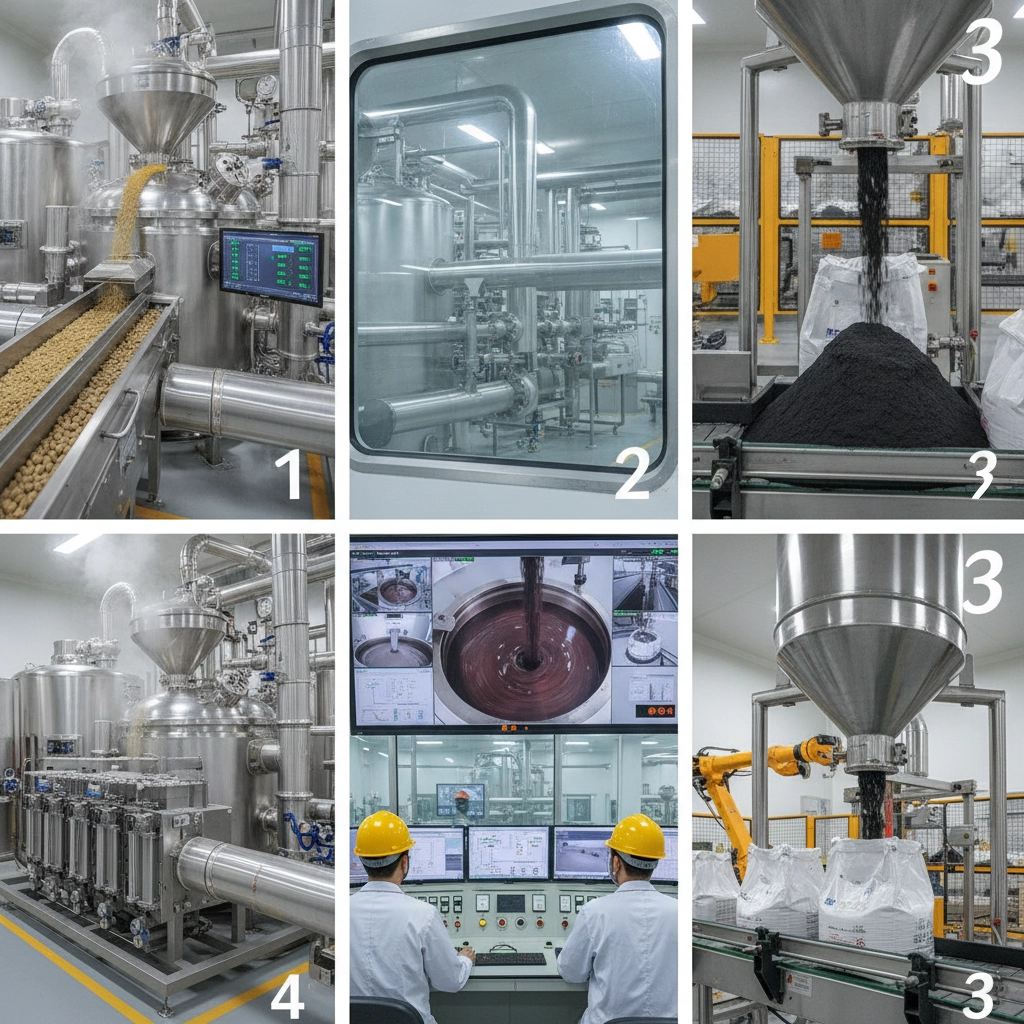
Comprehensive Guide to the Amylase Enzyme and Its Industrial Applications
Comprehensive Guide to the Amylase Enzyme and Its Industrial Applications
Understanding the Amylase Enzyme: Its Global Impact and Industrial Wonders
At first glance, an enzyme like amylase might seem like a tiny piece of biological trivia, but it plays an enormous role in industries from food production to biofuels. Globally, the amylase enzyme is a crucial biocatalyst driving efficiency and sustainability in multiple sectors. Understanding it is not just about appreciating a natural wonder—it's about unlocking greener processes, cost savings, and new innovations worldwide.
Introduction: Why the Amylase Enzyme Matters Worldwide
Amylase enzymes break down starch, a carbohydrate abundant in cereals and tubers, into simpler sugars. According to the Food and Agriculture Organization (FAO), cereals constitute nearly 30% of global calorie intake. This means amylase enzyme technology impacts billions daily. Industrially, the enzyme's global market value was estimated at over $1 billion in 2023, growing steadily with demand for sustainable food processing and renewable energy.
Yet challenges remain—traditional starch processing can be energy-intensive, and there’s an increasing call for organic and efficient solutions. Amylase enzymes offer an answer by enabling milder processing conditions and reducing environmental footprints.
What Is the Amylase Enzyme?
Simply put, amylase enzyme is a protein catalyst that acts on starch molecules to break them down into sugars like maltose and glucose. Think of it as nature’s molecular scissors for starch. This enzymatic action is fundamental not only in human digestion but also in many industrial setups where starch must be converted quickly and efficiently.
Industries such as brewing, textiles, paper, and especially biofuel production rely on amylase enzymes to speed up their workflows and reduce reliance on harsh chemicals.
Core Components of Amylase Enzymes and Their Practical Relevance
1. Specificity and Activity Range
Amylase enzymes come in several forms, mainly alpha, beta, and glucoamylase, each cleaving starch differently. Their effectiveness depends on temperature and pH, influencing real-world applications. For example, thermostable amylases can operate at higher temperatures, reducing contamination risk in processes.
2. Durability and Stability
Enzyme stability means longer shelf life and sustained activity during processing. Enzymes with high stability reduce costs and downtime by minimizing replacement frequency.
3. Source and Production Scalability
Microbial sources, particularly fungi and bacteria, dominate industrial amylase production because they can be cultured at scale economically. Manufacturers can then adjust production volumes rapidly based on demand.
4. Cost Efficiency
Given enzymes are biological, production costs can fluctuate based on feedstock and fermentation processes. New biotech advances aim to reduce costs by engineering more productive strains.
Mini takeaway:
- The amylase enzyme’s varied forms and properties enable tailored applications.
- Its stability and scalable microbial production make it industrially viable.
- Cost considerations guide effective enzyme choice for processes.
Global Applications & Use Cases of Amylase Enzymes
From Asia’s vast rice and starch processing sectors to Europe’s bioethanol plants, amylase enzymes are everywhere. For example:
- Brewing Industry (Europe): Amylase breaks down cereal starch to fermentable sugars in beer and whiskey production.
- Baking (North America): Supplementing flour with amylase improves dough handling and bread shelf life.
- Biofuel Production (Brazil, USA): Enzymatic starch saccharification replaces heat-intensive processes, cutting emissions.
- Textile Industry (India): Enzyme-based desizing removes starch from fabrics gently, reducing water and chemical use.
Even humanitarian sectors benefit since enzymatic processing can optimize local crop utilization — a boon in regions with food security challenges.
Product Specifications of Representative Amylase Enzymes
| Property | Alpha-Amylase | Glucoamylase |
|---|---|---|
| Optimum Temperature | 60-70°C | 50-60°C |
| Optimum pH | 6.0 - 7.0 | 4.0 - 4.5 |
| Starch Substrate Type | Raw and Gelatinized | Gelatinized only |
| Industrial Uses | Brewing, Baking, Textile | Bioethanol, Food Processing |
Comparison of Leading Amylase Enzyme Suppliers
| Supplier | Source Type | Enzyme Variants | Sustainability Practices | Global Reach |
|---|---|---|---|---|
| EnzymeCo | Bacterial | Alpha, Beta, Glucoamylase | Renewable raw materials; Waste valorization programs | Europe, Asia, Americas |
| Biozyme | Fungal | Alpha-Amylase specialized | Energy-efficient fermentation; Carbon-neutral certification | Asia, Africa, Europe |
| StarchLabs | Bacterial & Fungal mix | Wide range including thermostable enzymes | Closed-loop water systems; Biodegradable packaging | Global |
Advantages and Long-Term Value of Amylase Enzymes
Using amylase enzymes translates to tangible benefits:
- Cost savings: Lower energy inputs due to enzymatic reactions at mild conditions.
- Improved sustainability: Reduced chemical waste and emissions compared to conventional methods.
- Enhanced product quality: More consistent starch breakdown yields better texture, flavor, or fuel yield.
- Social Impact: Enabling smaller producers to adopt cleaner tech, uplifting communities.
Emotionally, businesses can feel pride partnering with eco-conscious operations—and consumers often reward those similarly focused companies.
Future Trends and Innovations in Amylase Enzyme Technology
The future looks bright. Advances in genetic engineering are creating enzymes that work faster and withstand harsher conditions. Meanwhile, synthetic biology holds promise for custom-designed amylases made for very specific starches or industry needs.
On the sustainability front, enzyme formulations with lower water demand and biodegradable enzyme carriers are gaining traction. Plus, digitization helps optimize enzyme dosing in real time, reducing waste.
Challenges & Solutions in Using Amylase Enzymes
Of course, amylase enzymes aren’t magic bullets. Their activity can be limited by raw material variability or inhibited by contaminants. Costs can fluctuate with microbial fermentation complexity. Some processes require precise pH and temperature control that can be tricky at scale.
Experts recommend:
- Robust quality control of feedstocks.
- Blending different enzyme types for broader substrate range.
- Investing in process automation to maintain environmental parameters.
Common Questions About Amylase Enzymes
- What industries benefit most from amylase enzymes?
- Brewing, baking, biofuel production, textiles, and paper industries widely utilize amylases for starch breakdown, improving efficiency and product quality.
- Can amylase enzymes be used in organic food production?
- Yes, enzymes derived from natural microbial fermentation are generally accepted in organic processing, but certification standards vary by region.
- How long do amylase enzymes remain active in industrial processes?
- Activity depends on operating conditions but typically ranges from several hours to days; thermostable variants last longer under industrial heat.
- Are amylase enzymes safe for human consumption?
- Absolutely. Amylases are naturally present in many foods and are used extensively in food manufacturing without known adverse effects.
Conclusion: Embracing the Power of Amylase Enzymes
Understanding the amylase enzyme opens the door to a sustainable, efficient future across multiple industries. Its ability to make starch processing cleaner, cheaper, and more adaptable has global implications—from feeding populations better to powering greener energy. For businesses looking to innovate and lead in environmental responsibility, embracing advanced amylase solutions is an outstanding step.
Ready to explore enzyme solutions tailored for your needs? Visit our website for more insights and products.
Ultimately, enzymes like amylase remind us how nature-inspired technology can help solve big challenges—kind of encouraging when you think about it.
References: