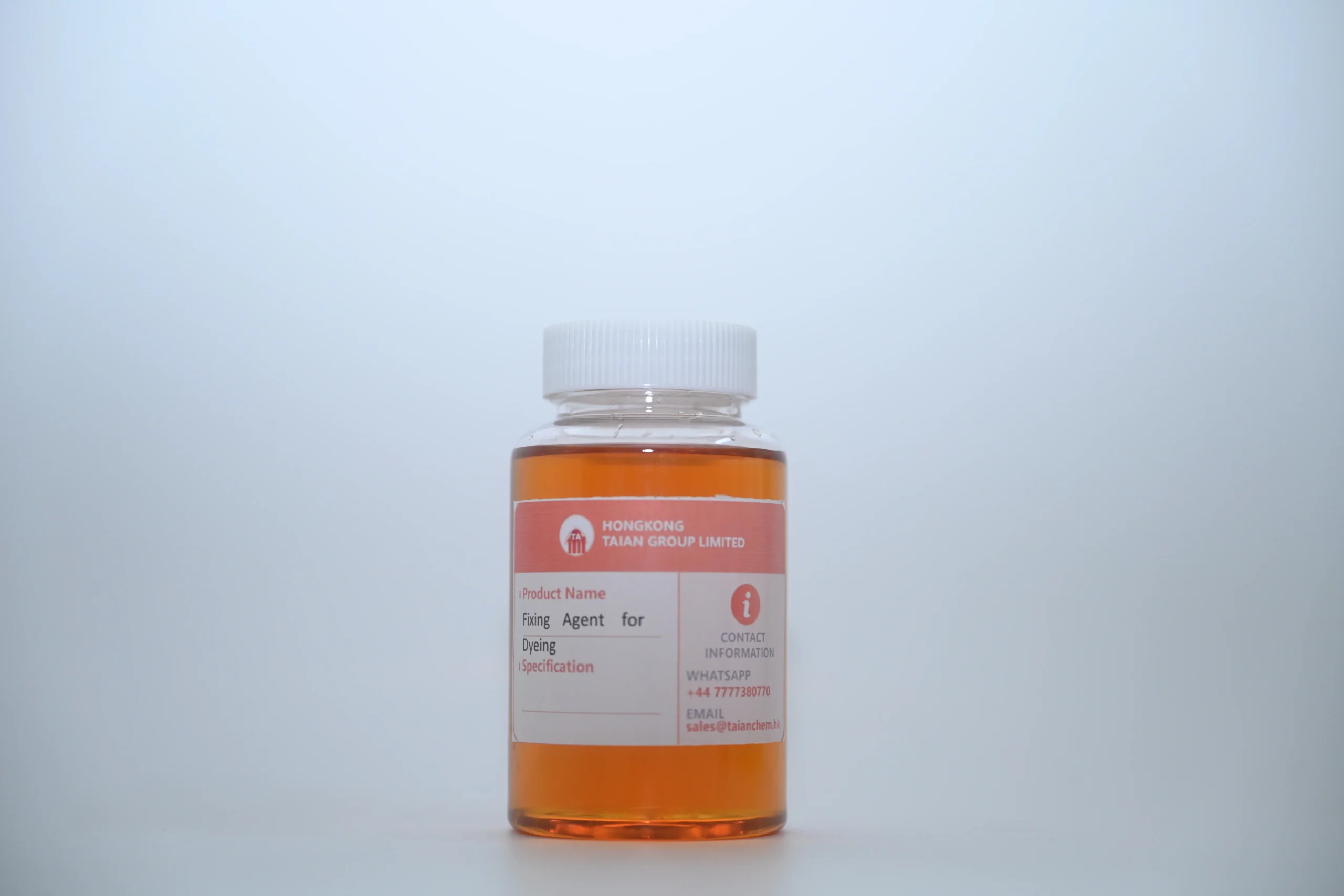

Our high-performance Dyeing Fixing Agent is a professional-grade chemical solution engineered to solve the critical challenge of poor wet fastness in reactive and direct dyes. By utilizing advanced cationic polymer technology, this agent creates robust chemical bonds that lock dye molecules permanently to cellulosic fibers, effectively eliminating color bleeding and staining during washing and perspiration.
Specifically optimized for cotton and blended fabrics, our formulation ensures that bright, clear shades are preserved without the dulling or darkening common in competing products. Whether you are producing high-end fashion garments, home textiles, or export-quality fabrics, this fixing agent provides the essential stability needed to meet stringent international quality standards such as ISO and AATCC.
Detailed Parameters
| Chemical Nature | Cationic Polymer Technology | Target Fibers | Cellulosic / Cotton / Viscose |
|---|---|---|---|
| Compatible Dyes | Reactive & Direct Dyes | Effective Dosage | 1.0% – 3.0% o.w.f. |
| Working pH Range | 4.0 – 6.0 | Fastness Improvement | 1.5 – 2.0 Grades (Wet Fastness) |
| Shade Change | Minimal (< 0.5 grade) | Hand Feel Effect | No effect on softness or drape |
| Application Methods | Exhaust & Continuous Padding | Environmental Status | Meets Textile Safety Standards |
Key Advantages
Superior Fastness
Dramatically improves wet fastness, water resistance, and perspiration fastness for dark and bright shades.
Color Purity
Advanced low-molecular-weight design ensures minimal shade change and prevents color dulling.
Dual-Binding Mechanism
Combines cationic sites and reactive groups to create a permanent fiber-dye-fixer complex.
Process Efficiency
Easy integration into existing dyehouse processes with compatible softening agent application.
Cost-Effective
High efficiency at low dosages (1-3%) reduces overall chemical waste and re-dyeing rates.
Global Compliance
Fully meets international environmental and safety standards for export to EU and Japanese markets.
Product Gallery
Management Platforms
Batch Control
Precise dosage management to ensure consistent wet fastness across all production lots.
Process Optimization
Compatible with exhaust dyeing machines and continuous padding lines for maximum flexibility.
Quality Monitoring
Integrated testing for ISO and AATCC fastness standards to reduce customer returns.
Waste Reduction
Minimizes unfixed dye molecules in effluent, supporting sustainable textile manufacturing.
Inventory Sync
Standardized industrial packaging for seamless logistics and warehouse management.
Formula Adjustment
Easily adjustable concentrations based on fabric weight and required fastness grade.
Investment Return Comparison
| Performance Metric | Standard Fixing Agents | Our Advanced Fixer |
|---|---|---|
| Wet Fastness Grade | Improvement by 0.5-1 grade | Improvement by 1.5-2 grades |
| Color Stability | Frequent shade darkening | Minimal change (<0.5 grade) |
| Fabric Hand-Feel | Often becomes stiff/rough | Maintains original softness |
| Re-dyeing Rate | Moderate (5-10%) | Low (<2%) |
| Market Acceptance | Basic domestic standards | EU/Japan Export Standards |
Frequently Asked Questions
It uses cationic polymers that form strong ionic bonds with anionic (negatively charged) reactive and direct dyes. This creates a large, water-insoluble complex that locks the dye into the fiber, preventing it from leaching out during washing.
Our product is specifically designed for minimal shade change. Unlike many competitors that darken the fabric, our low-molecular-weight formula maintains color purity with a change of less than 0.5 grade.
Yes, our fixing agent is formulated to be compatible with most standard softening agents and can be applied in the same process without compromising the performance of either chemical.
It is ideal for all cellulosic fibers, including 100% cotton, viscose, rayon, and organic cotton, especially when dyed with reactive or direct dyes.
The typical economical dosage ranges from 1% to 3% o.w.f. (on weight of fabric), depending on the depth of the shade and the specific fastness requirements of the end product.
Yes, it is designed to help manufacturers meet stringent ISO and AATCC standards, ensuring fabrics pass the strict quality inspections required for European and Japanese markets.