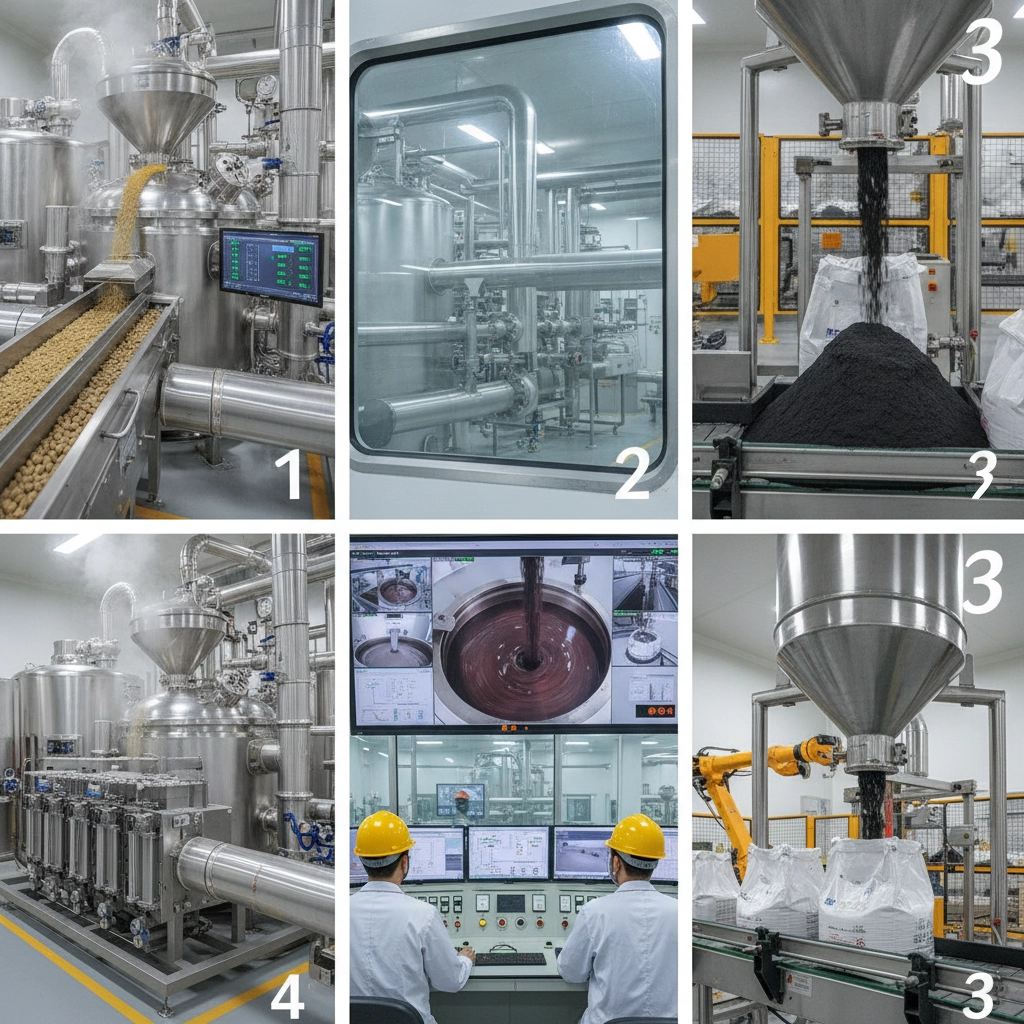
Maximizing Industrial Efficiency with Downstream Processing Enzymes
Maximizing Industrial Efficiency with Downstream Processing Enzymes
Maximizing Efficiency with Downstream Processing Enzymes
In the realm of biotechnology and industrial chemical production, the transition from fermentation to a purified final product is often the most challenging phase. This is where downstream processing enzymes play a pivotal role. By utilizing specific biological catalysts, manufacturers can significantly reduce the complexity of purification, lower operational costs, and enhance the overall yield of high-value proteins and chemicals. Whether it is breaking down cell walls or removing unwanted impurities, these enzymes offer a precision that traditional chemical methods often lack. In this guide, we will explore how these biological tools are transforming industrial efficiency.

The Role of Downstream Processing Enzymes in Purification
The primary objective of downstream processing is to isolate the target molecule from a complex mixture of cells, debris, and medium components. Downstream processing enzymes act as "molecular scissors," targeting specific bonds to facilitate easier separation. For instance, lysozymes are frequently employed to degrade bacterial cell walls, releasing intracellular products into the supernatant. This enzymatic approach is far more gentle than mechanical homogenization, reducing the risk of denaturing sensitive proteins. By integrating these enzymes early in the workflow, companies can achieve a higher degree of purity in fewer steps, directly impacting the bottom line.
Industry Insight: Enzymatic lysis typically results in a 15-20% increase in recovery rates for fragile recombinant proteins compared to high-pressure homogenization.
Key Types of Enzymes Used in Downstream Workflows
Depending on the target product, different categories of enzymes are deployed. Proteases are widely used to remove host cell proteins (HCPs), while nucleases are essential for degrading DNA and RNA that can increase the viscosity of the broth. The selection of downstream processing enzymes must be carefully balanced to ensure that the target molecule remains intact while the impurities are efficiently removed. Precision in enzyme selection prevents "over-digestion," which could otherwise lead to the loss of the active pharmaceutical ingredient (API) or the target chemical compound.
Common Enzyme Applications:
• Nucleases: Reducing viscosity for better filtration.
• Proteases: Clearing impurity proteins from the final product.
• Glycosidases: Modifying sugar chains for specific therapeutic properties.
• Lysozymes: Effective cell wall disruption for intracellular release.
Comparing Downstream Processing Enzymes vs. Chemical Methods
Many legacy systems rely on harsh chemicals, such as strong acids or detergents, for cell lysis and impurity removal. However, the shift toward downstream processing enzymes offers a sustainable and high-precision alternative. Chemical methods often require extensive neutralization steps and can leave toxic residues that are difficult to remove during final polishing. In contrast, enzymes operate under mild conditions (neutral pH and moderate temperatures), preserving the biological activity of the target product and reducing the environmental footprint of the manufacturing plant.
Integrating Downstream Processing Enzymes into Large-Scale Production
Scaling up the use of downstream processing enzymes requires careful optimization of kinetics and dosing. In industrial bioreactors, the timing of enzyme addition is critical. Adding a nuclease too early may interfere with the fermentation process, while adding it too late may lead to clogged filters due to high DNA concentrations. Modern automated systems now allow for precise "pulse-feeding" of enzymes, ensuring maximum activity with minimum waste. This streamlined integration reduces the overall time spent in the purification cycle, accelerating the time-to-market for critical pharmaceutical products.

Technical Specifications for Industrial-Grade Enzymes
When sourcing downstream processing enzymes, quality control parameters such as activity units per milligram (U/mg), purity levels, and thermal stability are paramount. Industrial enzymes must be robust enough to withstand slight fluctuations in temperature and pH without losing their catalytic efficiency. Below is a typical specification table for standard processing enzymes used in high-purity applications:
Future Trends in Enzymatic Downstream Processing
The future of downstream processing enzymes lies in immobilization and protein engineering. By immobilizing enzymes on solid supports, manufacturers can reuse the catalysts over multiple cycles, dramatically reducing the cost of consumables. Furthermore, directed evolution is allowing scientists to create "super-enzymes" that can operate at extreme pH levels or resist inhibition by product buildup. As the industry moves toward continuous manufacturing, these advanced enzymatic tools will be the cornerstone of real-time purification, enabling a more agile and responsive supply chain for bio-based chemicals.
Conclusion: Streamlining Production with Precision Enzymes
The strategic application of downstream processing enzymes is no longer just an option but a necessity for competitive bio-manufacturing. By replacing harsh chemicals with targeted biological catalysts, companies can ensure higher product purity, better stability, and a significantly lower environmental impact. As technology evolves, the integration of engineered enzymes will continue to push the boundaries of what is possible in industrial purification. For those looking to optimize their workflow, investing in high-quality enzymatic solutions is the most effective path to operational excellence.
Frequently Asked Questions (FAQs)
How do downstream processing enzymes reduce overall costs?
Downstream processing enzymes reduce costs by simplifying the purification train. By efficiently removing impurities (like DNA or host proteins) early in the process, they reduce the burden on expensive chromatography columns and filtration membranes, extending the life of these consumables. Additionally, because they operate under mild conditions, there is a lower need for expensive energy-intensive cooling or heating systems and a reduction in the cost of neutralizing hazardous chemical waste. This leads to a leaner, more cost-effective production cycle.
Can these enzymes be removed from the final product?
Yes, the removal of processing enzymes is a standard part of the polishing phase in downstream processing. Most industrial enzymes are removed using size-exclusion chromatography, ultrafiltration, or by utilizing heat-inactivation steps if the target product is thermostable. In pharmaceutical applications, specific removal assays are used to ensure that no residual enzyme remains in the final API, ensuring safety and regulatory compliance. The choice of enzyme often depends on how easily it can be separated from the target molecule.
What is the difference between lysis enzymes and polishing enzymes?
Lysis enzymes, such as lysozymes, are used at the beginning of downstream processing to break open cell walls and release the target product. Their role is "destructive" to facilitate release. Polishing enzymes, such as specific proteases or nucleases, are used later in the process to "clean up" the mixture by degrading remaining small-molecule impurities or unwanted proteins. While lysis enzymes increase the volume of the crude extract, polishing enzymes increase the purity of the final concentrate, making both essential for a complete workflow.
Where can I source high-purity enzymes for industrial use?
For high-purity, industrial-grade catalysts, it is essential to partner with a supplier that provides comprehensive technical documentation and consistency in activity levels. You can find a wide range of specialized solutions and professional guidance on the Dyeingchem website, where a focus on quality and industrial application ensures that the enzymes meet the rigorous standards required for large-scale biotechnology and chemical processing.