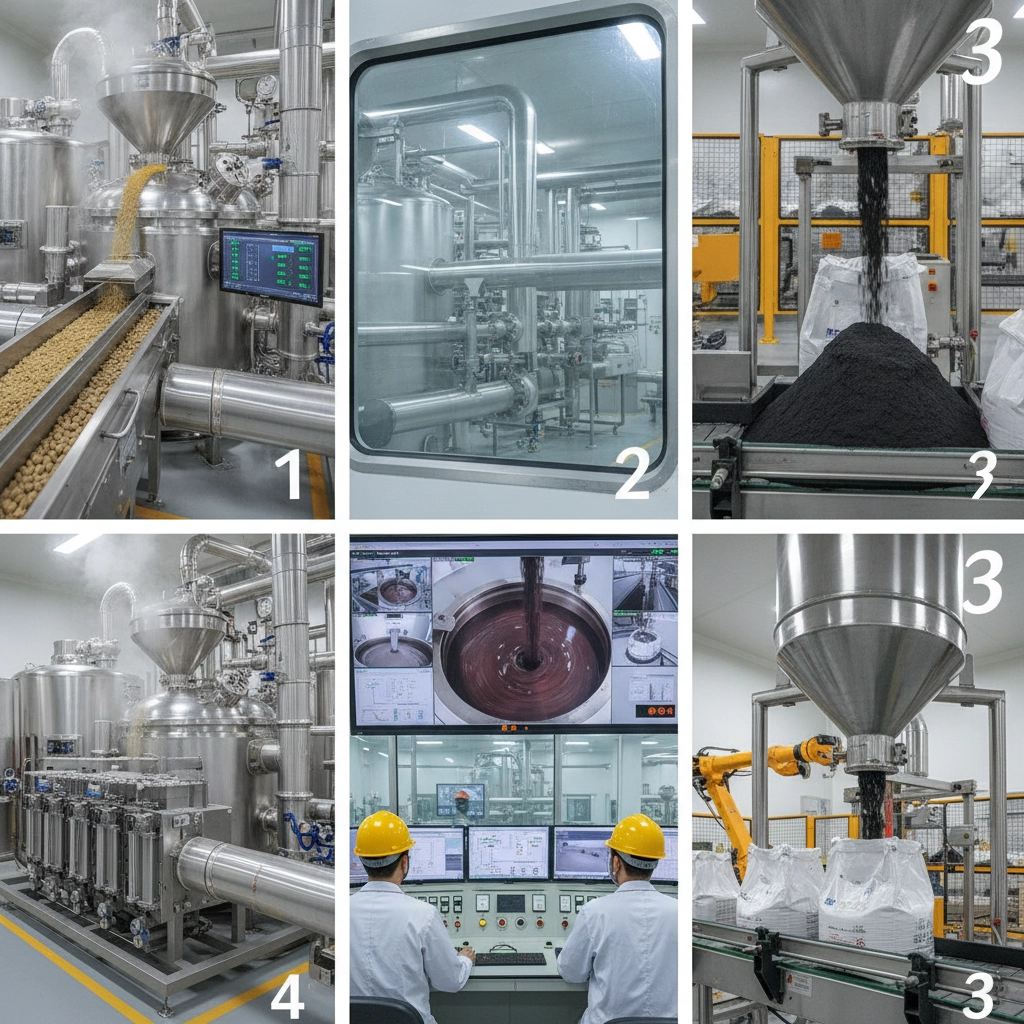
Sustainable Innovation Using Enzymes Used in Industrial Processes
Sustainable Innovation Using Enzymes Used in Industrial Processes
The Role of Enzymes Used in Industrial Processes: A Sustainable Revolution
In the modern era of manufacturing, the shift toward "green chemistry" has placed enzymes used in industrial processes at the forefront of innovation. These biological catalysts provide a highly efficient, specific, and environmentally friendly alternative to traditional chemical catalysts. From the textile industry to biofuel production and pharmaceuticals, enzymes allow factories to reduce energy consumption and minimize toxic waste. By operating at milder temperatures and pH levels, these proteins not only lower operational costs but also enhance the quality of the final product. In this guide, we will explore how industrial enzymes are transforming global production standards.

Types of Industrial Enzymes and Their Functions
Industrial enzymes are categorized based on the specific chemical bonds they break. The most common include proteases, which break down proteins; amylases, which degrade starch; and lipases, which act on fats. In the textile sector, cellulases are indispensable for bio-polishing fabrics to remove fuzz and pilling. The versatility of these catalysts is what makes enzymes used in industrial processes so valuable across different sectors. Their ability to target specific molecules without affecting the surrounding structure prevents the degradation of raw materials, ensuring higher yield and purity.
Industry Fact: Modern biotechnology allows for the creation of "extremophiles"—enzymes derived from organisms that thrive in extreme heat or acidity, making them perfect for harsh industrial environments.
Efficiency Gains from Enzymes Used in Industrial Processes
The transition from inorganic catalysts to biological ones has yielded measurable improvements in productivity. One of the most significant advantages is the reduction in activation energy required for reactions. This means processes that previously required boiling temperatures can now occur at 40-60°C. Furthermore, the specificity of enzymes used in industrial processes eliminates the need for complex purification steps, as there are fewer by-products generated. This leads to a leaner production line and a significantly smaller carbon footprint for the manufacturer.
Applications of Enzymes Used in Industrial Processes in Textiles
The textile industry is perhaps one of the biggest beneficiaries of enzymatic technology. Traditionally, "desizing" and "scouring" required harsh caustic soda and high heat, which damaged fabric fibers and polluted waterways. Now, by utilizing enzymes used in industrial processes, manufacturers can achieve the same results with biological agents. For example, amylases are used to remove starch from warp yarns, while pectinases remove impurities from raw cotton, preserving the natural strength of the fabric while ensuring a smooth surface for dyeing.

Challenges and Optimization of Industrial Enzymes
Despite their benefits, the application of enzymes used in industrial processes is not without challenges. Enzymes are proteins, meaning they are sensitive to extreme changes in temperature and pH, which can lead to denaturation (loss of shape and function). To combat this, scientists use immobilization techniques, where enzymes are attached to an inert, insoluble material. This not only stabilizes the enzyme but also allows it to be recovered and reused multiple times, drastically reducing the cost of the raw materials.
Technical Specifications for Enzyme Selection
Choosing the right enzyme requires a deep understanding of the chemical environment of the process. Factors such as the optimal pH range and thermal stability are critical. When integrating enzymes used in industrial processes into a production line, engineers must consider the substrate concentration and the presence of inhibitors. Below is a typical specification table used when sourcing industrial enzymes for textile and chemical processing:
Conclusion: The Future of Green Manufacturing
The integration of enzymes used in industrial processes represents a pivotal step toward a sustainable future. By replacing aggressive chemicals with biological catalysts, industries can significantly lower their environmental impact while maintaining or even improving efficiency. As biotechnology continues to evolve, we can expect even more tailored, robust, and cost-effective enzymatic solutions to emerge, further decoupling industrial growth from environmental degradation. Embracing these biological tools is no longer just an option—it is a necessity for the competitive, eco-conscious manufacturer.
Frequently Asked Questions (FAQs)
Are enzymes used in industrial processes safe for workers?
Yes, generally, industrial enzymes are much safer than the harsh chemicals they replace. They are biodegradable and non-toxic to the environment. However, because enzymes are proteins, some individuals may develop respiratory sensitivities or allergic reactions if they inhale enzyme dust or aerosols. To ensure safety, it is recommended that workers use appropriate personal protective equipment (PPE), such as masks and gloves, and that facilities maintain proper ventilation systems. When handled according to safety data sheets (SDS), they provide a significantly safer working environment than traditional caustic agents.
How do enzymes reduce the cost of production?
Enzymes reduce costs through several mechanisms. First, they lower energy bills by allowing reactions to occur at lower temperatures. Second, they reduce the amount of water and chemical neutralizing agents needed for cleaning and wastewater treatment. Third, their high specificity means fewer raw materials are wasted on unwanted side-reactions, increasing the overall yield of the desired product. While the initial cost of a high-quality enzyme can be higher than a basic chemical, the total operational expenditure (OPEX) is usually lower due to these systemic efficiencies.
Can enzymes be reused in a continuous industrial cycle?
In their free-floating (soluble) form, enzymes are typically used once and then lost in the product stream. However, through a process called immobilization, enzymes are anchored to a solid support (like beads or membranes). This allows the manufacturer to pass the substrate over the enzymes and then retrieve the catalyst for the next batch. This "fixed-bed" approach is common in the food and pharmaceutical industries and is becoming more frequent in textile processing. Immobilization significantly increases the cost-effectiveness of enzymes used in industrial processes by extending their active lifespan.
What is the difference between an enzyme and a chemical catalyst?
The primary difference lies in origin and specificity. Chemical catalysts are often metals or inorganic compounds that can trigger a wide variety of reactions but often require extreme conditions (heat/pressure). Enzymes are biological proteins produced by living cells (bacteria, fungi, plants). Unlike chemical catalysts, enzymes are "lock-and-key" specific; they only react with a very specific molecule. This prevents the "over-processing" of materials, which is why they are preferred for delicate substrates like silk, wool, or high-end pharmaceuticals where precision is paramount.