
In the rigorous environment of modern textile wet-processing, achieving absolute stability and precision is paramount. Our combined Chelating Dispersant and Peroxide Stabilizer solution provides a high-performance chemical foundation for pre-treatment and bleaching stages. By meticulously controlling metal ion interference and regulating hydrogen peroxide decomposition, these auxiliaries ensure that fabrics reach peak brightness, optimal absorbency, and impeccable uniformity, meeting the stringent quality standards of global apparel and home-textile markets.
As water quality varies across different production regions, the risk of metal-induced defects increases. Our advanced chemical system is engineered to neutralize these variables, preventing catalytic decomposition and fabric tendering. By integrating these essential auxiliaries into your scouring and bleaching operations, manufacturers can guarantee batch-to-batch consistency, reduce processing defects, and optimize chemical consumption for a more sustainable and cost-effective production cycle.
Detailed Parameters
| Application Stage | Pre-treatment & Bleaching | Chemical Type | Specialty Textile Auxiliaries |
|---|---|---|---|
| Target Ions | Ca²⁺, Mg²⁺, Fe³⁺, Cu²⁺ | Active Agent | Hydrogen Peroxide (H₂O₂) |
| Fiber Compatibility | Natural & Regenerated Cellulose | Process Type | Batch & Continuous |
| Primary Function | Metal Chelation & Stabilization | Operational pH | Alkaline Conditions |
| Key Outcome | Enhanced Whiteness & Stability | Effect | Anti-Tendering & Anti-Spotting |
Key Advantages
Metal Ion Control
Effectively binds and removes calcium, magnesium, iron, and copper to prevent staining and catalytic decomposition.
Controlled Bleaching
Inhibits rapid peroxide breakdown, ensuring a steady bleaching rate and preventing fabric damage.
Superior Whiteness
Delivers cleaner, brighter fabric surfaces with reduced yellowing and eliminated shade variations.
Fiber Protection
Avoids harsh, uncontrolled reactions that lead to cellulose weakening or "tendering" of the fabric.
Process Efficiency
Improves absorbency for subsequent dyeing stages and reduces the need for costly rework.
Equipment Longevity
Prevents scale buildup in pipes and nozzles, protecting machinery from corrosion and deposits.
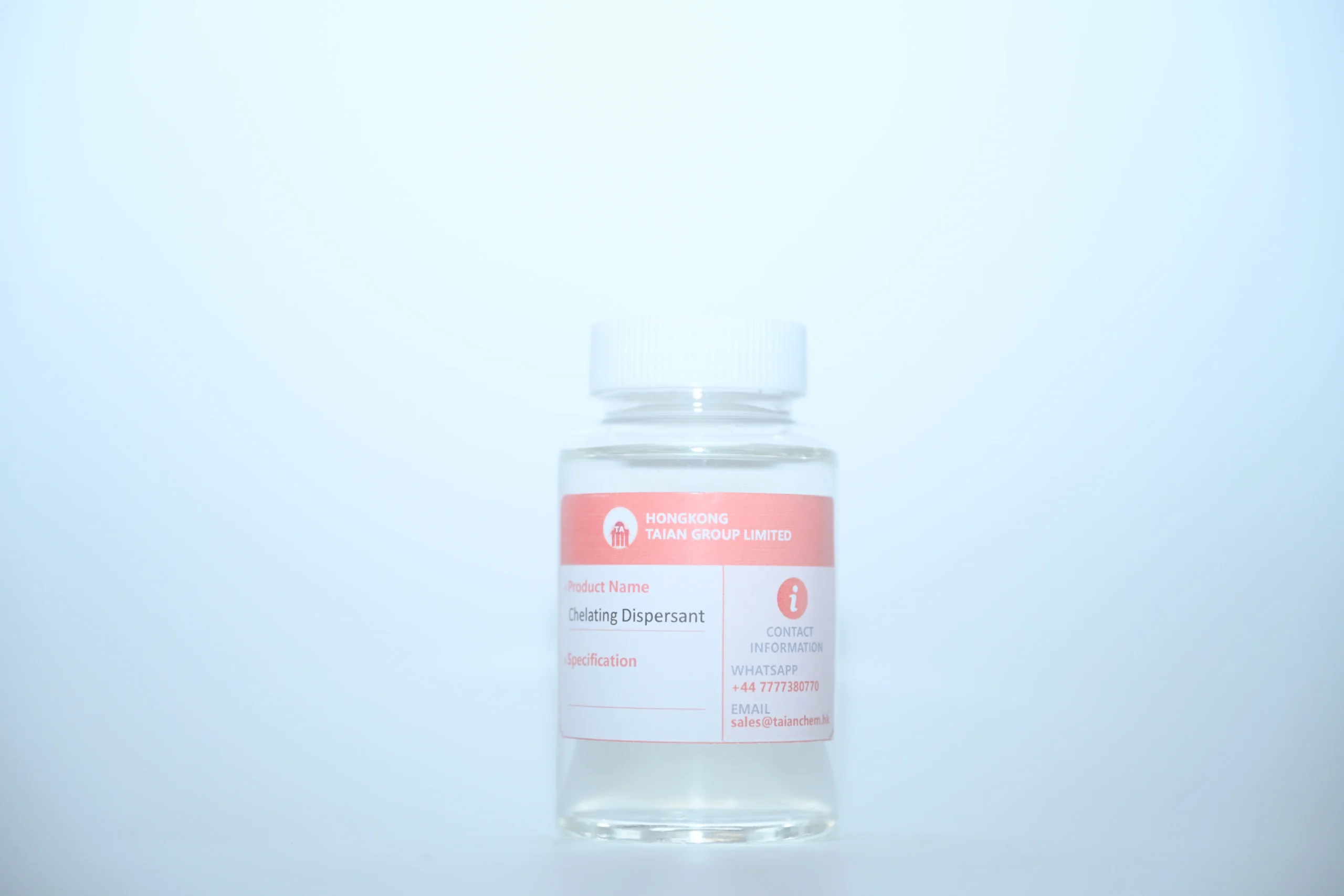
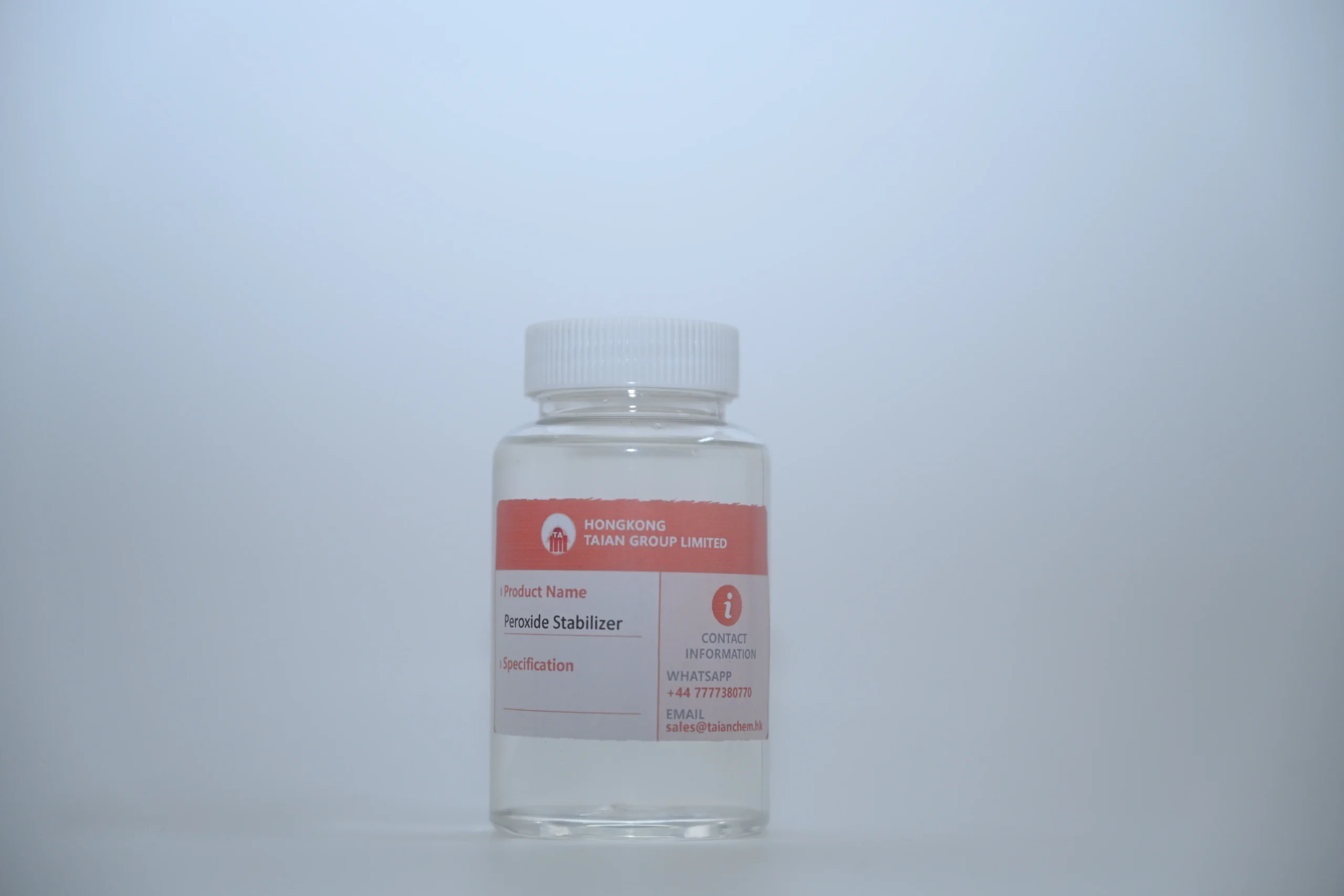
Product Gallery
Management Platforms
Inventory Control
Precision tracking of chemical stocks to ensure uninterrupted production flows.
Dosage Optimization
Digital calibration of auxiliary concentrations based on water hardness levels.
Quality Alerts
Real-time monitoring of bleaching stability to prevent batch failures.
Compliance Tracking
Ensuring all pre-treatment chemicals meet global environmental and safety standards.
Batch Traceability
Linking specific auxiliary lots to finished textile rolls for quality auditing.
Process Automation
Integration with automated dosing systems for continuous bleaching ranges.
Investment Return Comparison
| Metric | Without Stabilizer/Chelant | With Our Solution |
|---|---|---|
| Fabric Rework Rate | High (due to spots/yellowing) | Ultra-Low (consistent results) |
| Peroxide Consumption | Inefficient/Rapid Loss | Optimized/Controlled |
| Whiteness Level | Variable/Uneven | High & Uniform |
| Fiber Strength | Risk of Tendering | Maintained/Protected |
| Equipment Downtime | Frequent (Scale buildup) | Minimized (Clean system) |
Frequently Asked Questions
Metal ions like iron and copper act as catalysts that trigger the rapid, uncontrolled decomposition of hydrogen peroxide. Chelating agents bind these ions, preventing them from causing spots, yellowing, or fabric damage.
Tendering is the weakening of cellulose fibers caused by excessive or sudden peroxide release. A stabilizer ensures the peroxide breaks down slowly and evenly, protecting the structural integrity of the fiber.
Yes, they are highly compatible with cotton, viscose, modal, linen, and T/C blends where the cellulosic component requires controlled bleaching.
By reducing chemical waste (peroxide), eliminating rework due to defects, and extending the life of machinery by preventing scale, the overall operational cost per meter is significantly lowered.
Absolutely. They are designed for both batch processes (jiggers, winches) and continuous systems (pad-steam, pad-roll) to ensure uniform results at high speeds.
They actually improve it. By ensuring the thorough removal of impurities and preventing the redeposition of salts, the fabric becomes more absorbent and ready for uniform dyeing.