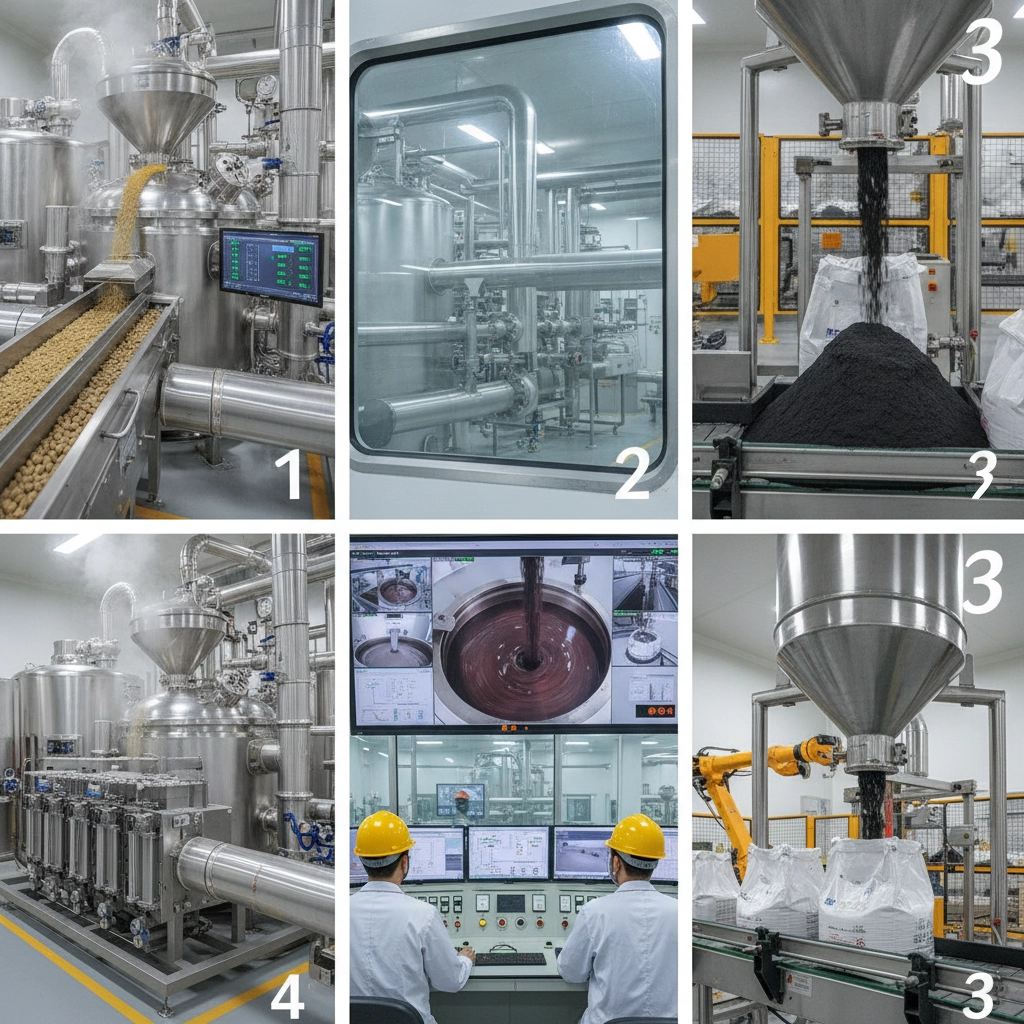
Efficiency and Benefits of industrial use of immobilized enzymes
Efficiency and Benefits of industrial use of immobilized enzymes
Unlocking Efficiency: The Industrial Use of Immobilized Enzymes
In the modern landscape of biotechnology, the industrial use of immobilized enzymes has emerged as a cornerstone for sustainable manufacturing. By anchoring enzymes to an inert, insoluble material, industries can overcome the inherent instability and high costs associated with free-floating catalysts. This process not only enhances the stability of the biocatalysts but also allows for their repeated use, drastically reducing waste and operational expenditures. From pharmaceutical synthesis to textile processing, immobilization is transforming how we approach chemical reactions, moving us closer to a "green chemistry" ideal. Understanding the nuances of this technology is essential for any business looking to optimize its production efficiency.

Mechanisms Behind the Industrial Use of Immobilized Enzymes
The core of the industrial use of immobilized enzymes lies in the method of attachment. Depending on the desired outcome, enzymes can be immobilized via physical adsorption, covalent bonding, or entrapment within a polymer matrix. Adsorption is often the simplest method, relying on Van der Waals forces, while covalent bonding provides the strongest attachment, preventing the enzyme from leaking into the product stream. Entrapment, on the other hand, creates a protective cage around the enzyme, shielding it from harsh environmental conditions. Each method influences the enzyme's activity and selectivity, making the choice of carrier material—such as silica, alginate, or synthetic polymers—critical for industrial success.
Pro Tip: Choosing a carrier with high porosity increases the surface area available for enzyme attachment, which directly boosts the volumetric productivity of the bioreactor.
Comparing Free Enzymes vs. Immobilized Systems
When evaluating the industrial use of immobilized enzymes, it is helpful to compare them against traditional free enzyme systems. While free enzymes often exhibit higher initial activity due to the absence of steric hindrance, they are typically "one-and-done" catalysts that are lost after a single batch. Immobilized enzymes, conversely, can be recovered via simple filtration or used in continuous flow reactors. This shift from batch processing to continuous processing allows for higher throughput and more consistent product quality, which is a primary driver for adoption in large-scale chemical plants.
Key Industrial Sectors Leveraging Immobilized Enzymes
The versatility of the industrial use of immobilized enzymes spans multiple high-value sectors. In the food and beverage industry, glucose isomerase is immobilized to produce high-fructose corn syrup on a massive scale. In the pharmaceutical sector, immobilized lipases are used to synthesize chiral intermediates for drugs, ensuring high enantiomeric purity. Furthermore, the textile and leather industries utilize immobilized cellulases and proteases for bio-polishing and bating, which reduces the reliance on harsh caustic chemicals and minimizes environmental runoff.

Technical Specifications for Enzyme Carriers
To maximize the efficiency of the industrial use of immobilized enzymes, the carrier material must meet specific technical criteria. It must be chemically inert to avoid interfering with the reaction and mechanically strong to withstand the pressure of industrial bioreactors. The following table outlines typical specifications for the most common industrial carriers used today:
Overcoming Challenges in Enzyme Immobilization
Despite the advantages, the industrial use of immobilized enzymes is not without hurdles. One primary challenge is mass transfer limitation, where the substrate cannot reach the enzyme embedded deep within a carrier. This can lead to a decrease in the apparent reaction rate. To solve this, engineers optimize the particle size of the carrier and increase the turbulence within the reactor. Another issue is "enzyme leaching," where the catalyst detaches from the support over time. Advanced cross-linking techniques, such as using glutaraldehyde, are often employed to secure the enzymes more permanently, ensuring a longer operational half-life.
Conclusion: The Future of Biocatalysis
The industrial use of immobilized enzymes represents a pivotal shift toward a more sustainable and economically viable chemical industry. By combining the precision of biological catalysts with the durability of synthetic supports, companies can achieve higher purity, lower waste, and significantly reduced costs. As we move forward, the integration of nanotechnology and genetically engineered enzymes will further expand the horizons of immobilization, making industrial processes cleaner and more efficient than ever before.
Frequently Asked Questions (FAQs)
Why is immobilization preferred over using free enzymes in industry?
Immobilization is preferred primarily because it allows for the recovery and reuse of the enzymes. Free enzymes are dissolved in the reaction mixture and are typically lost during product purification, making them a recurring cost. Immobilized enzymes are anchored to a solid support, meaning they can be easily separated from the final product. Additionally, immobilization often enhances the enzyme's resistance to temperature and pH fluctuations, which is critical for maintaining stability in harsh industrial environments.
What are the most common carriers used for enzyme immobilization?
The choice of carrier depends on the specific industrial application. Common inorganic carriers include silica gel and alumina, valued for their mechanical strength and thermal stability. Organic carriers include natural polymers like alginate, chitosan, and cellulose, as well as synthetic polymers like polyacrylamide and polystyrene. The decision is usually based on the required binding strength, the pore size needed for substrate access, and the overall cost of the material.
Does immobilization reduce the activity of the enzyme?
In some cases, yes. The process of immobilization can lead to a loss of activity through two main mechanisms: conformational change (where the enzyme's shape is altered during binding) or steric hindrance (where the carrier physically blocks the substrate from reaching the active site). However, this initial loss is usually offset by the ability to reuse the enzyme for dozens or hundreds of cycles, resulting in a much higher overall "total turnover number" compared to free enzymes.
How do immobilized enzymes contribute to "Green Chemistry"?
Immobilized enzymes promote green chemistry by reducing the amount of chemical waste generated during production. Because they are reusable, fewer raw materials are needed to produce the catalysts. Furthermore, they often allow reactions to occur at lower temperatures and pressures compared to traditional metallic catalysts, significantly reducing energy consumption. Their high selectivity also means fewer by-products are formed, simplifying the purification process and reducing the need for toxic organic solvents.