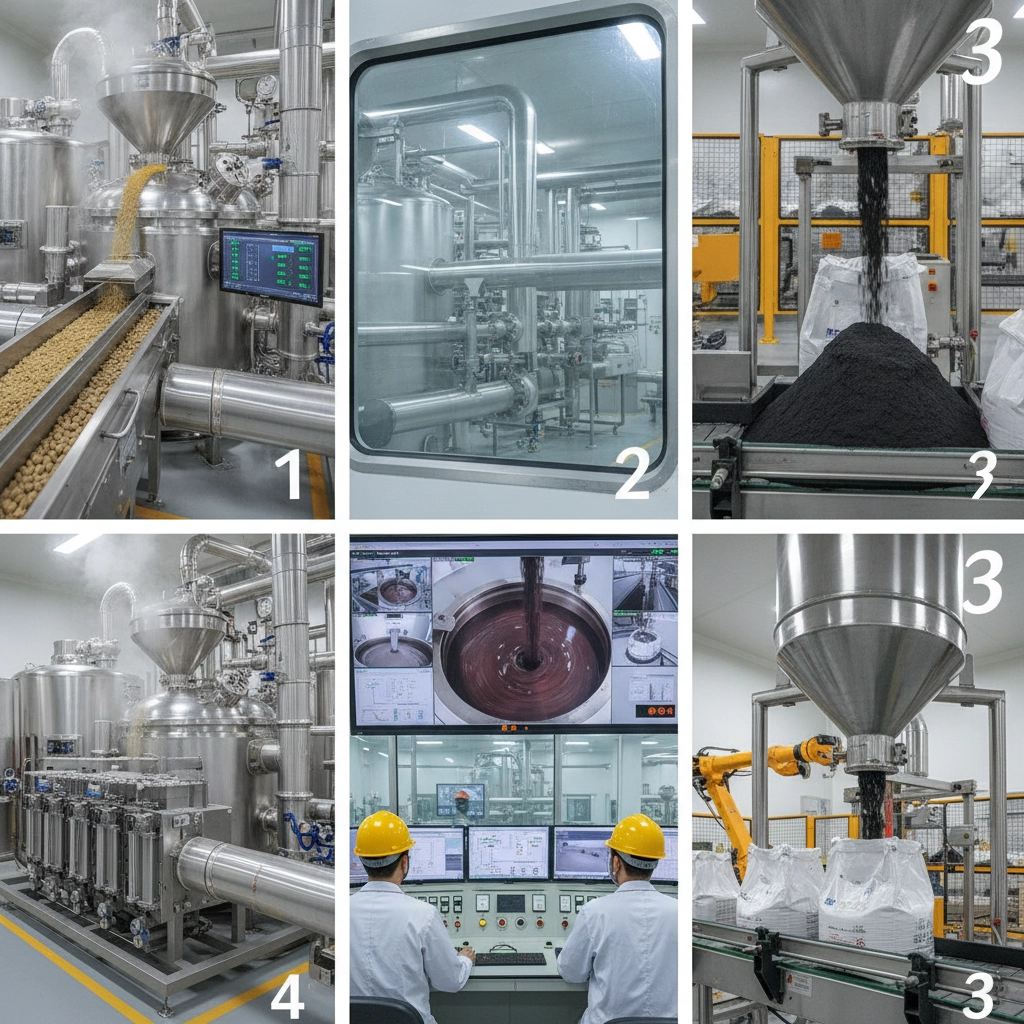
Sustainable Use of Immobilized Enzymes in Wastewater Treatment
Sustainable Use of Immobilized Enzymes in Wastewater Treatment
The Innovative Use of Immobilized Enzymes in Wastewater Treatment
Modern industrialization has led to an increase in complex pollutants in our water systems, necessitating more efficient degradation methods. The use of immobilized enzymes in wastewater treatment has emerged as a sustainable and highly effective alternative to traditional chemical treatments. By attaching enzymes to a solid support, industries can achieve higher stability, easier recovery, and prolonged catalytic activity. This approach is particularly vital for treating textile dyes, pharmaceutical residues, and organic pollutants, ensuring that treated water meets strict environmental standards before being released into the ecosystem.

How Enzyme Immobilization Works for Environmental Cleanup
Enzymes are natural catalysts that speed up chemical reactions, but in their "free" form, they are often unstable and difficult to recover from a large volume of water. Immobilization involves confining these enzymes within a matrix or attaching them to a surface. This process prevents the enzymes from being washed away and protects them from harsh pH levels or temperature fluctuations common in industrial runoff. When applying the use of immobilized enzymes in wastewater treatment, the water flows over the immobilized catalyst, and the pollutants are broken down into non-toxic metabolites without the need for adding more chemicals constantly.
Key Mechanisms: Common methods include adsorption (physical binding), covalent bonding (strong chemical links), and entrapment (locking enzymes in a polymer gel), each offering different levels of stability and activity.
Comparing Free Enzymes vs. Immobilized Enzymes
For facility managers, the choice between free and immobilized systems often comes down to operational costs and efficiency. While free enzymes are easier to introduce initially, they are "single-use," meaning they are lost after the treatment cycle. In contrast, the use of immobilized enzymes in wastewater treatment allows for a continuous flow process where the catalyst remains in the reactor, drastically reducing the cost of enzyme replenishment.
Target Pollutants and the Efficiency of Immobilized Enzymes
Certain enzymes are specifically tailored for different types of waste. For example, laccases and peroxidases are highly effective in decolorizing textile effluents. By utilizing the use of immobilized enzymes in wastewater treatment, these catalysts can break the complex aromatic rings of synthetic dyes, transforming them into colorless and biodegradable fragments. This is a significant leap over traditional coagulation methods which often produce toxic sludge that requires further disposal.

Technical Specifications for Enzyme Support Materials
The effectiveness of the system depends heavily on the support material (the matrix) used for immobilization. The material must be chemically inert, mechanically strong, and possess a high surface area to maximize enzyme loading. In the professional use of immobilized enzymes in wastewater treatment, materials like silica, alginate, and synthetic polymers are preferred for their durability and porosity.
Challenges and Future Directions in Enzyme Application
Despite the clear advantages, the use of immobilized enzymes in wastewater treatment does face some hurdles. Mass transfer resistance can occur, where the pollutant cannot easily reach the enzyme trapped inside a bead. Additionally, the initial cost of sophisticated support materials can be high. However, research into nanotechnology and genetic engineering is creating "super-enzymes" that are more resilient and active, promising a future where wastewater treatment is entirely biological, chemical-free, and carbon-neutral.
Integrating Biocatalysis into Industrial Water Cycles
To maximize the benefits, companies are integrating immobilized enzyme reactors into their existing water treatment plants as a "polishing" step. After primary sedimentation and biological treatment, the use of immobilized enzymes in wastewater treatment targets the remaining recalcitrant compounds that bacteria cannot digest. This hybrid approach ensures maximum purity and allows industries to recycle water back into their production lines, significantly reducing overall water consumption and operational overhead.
Conclusion: A Greener Path to Water Purification
The use of immobilized enzymes in wastewater treatment represents a paradigm shift in environmental engineering. By combining the specificity of biological catalysts with the durability of material science, we can treat industrial waste more efficiently and sustainably. Investing in these technologies not only ensures compliance with environmental laws but also promotes a circular economy by transforming waste into clean resources. For a future of clean water, biocatalysis is the key.
Frequently Asked Questions (FAQs)
What are the primary benefits of using immobilized enzymes over free ones?
The primary benefit is reusability. Free enzymes are dissolved in the wastewater and are lost once the process is complete. Immobilized enzymes are attached to a support, meaning they can be recovered and used for hundreds of cycles. Additionally, immobilization increases the thermal and chemical stability of the enzymes, allowing them to function in industrial conditions (such as high temperature or varying pH) that would normally denature a free enzyme. This leads to a significant reduction in long-term operational costs.
Can immobilized enzymes treat all types of wastewater?
While highly versatile, enzymes are substrate-specific. This means a specific enzyme is needed for a specific pollutant. For instance, laccase is excellent for dyes and phenols, while lipases are used for oily waste. Therefore, the use of immobilized enzymes in wastewater treatment usually involves a "cocktail" of different enzymes or a series of specialized reactors to target the diverse range of pollutants found in industrial effluent.
Is this method environmentally friendly compared to chemical treatment?
Yes, it is significantly more eco-friendly. Traditional chemical treatments often rely on strong acids, bases, or coagulants (like alum) that produce large amounts of secondary chemical sludge, which is often toxic and difficult to dispose of. Enzymatic treatment is a biodegradable process that operates under milder conditions and typically produces non-toxic by-products. It reduces the chemical footprint of the treatment plant and aligns with "Green Chemistry" principles by reducing waste and energy consumption.
How long does an immobilized enzyme catalyst typically last?
The lifespan depends on the binding method and the nature of the wastewater. Adsorbed enzymes may leach faster, while covalently bonded enzymes are much more durable. In industrial settings, a well-designed immobilized enzyme system can maintain significant activity for several weeks or even months of continuous operation. Factors like "fouling" (where particles clog the support) can shorten the lifespan, but regular backwashing and cleaning of the support matrix can extend the catalyst's effectiveness.