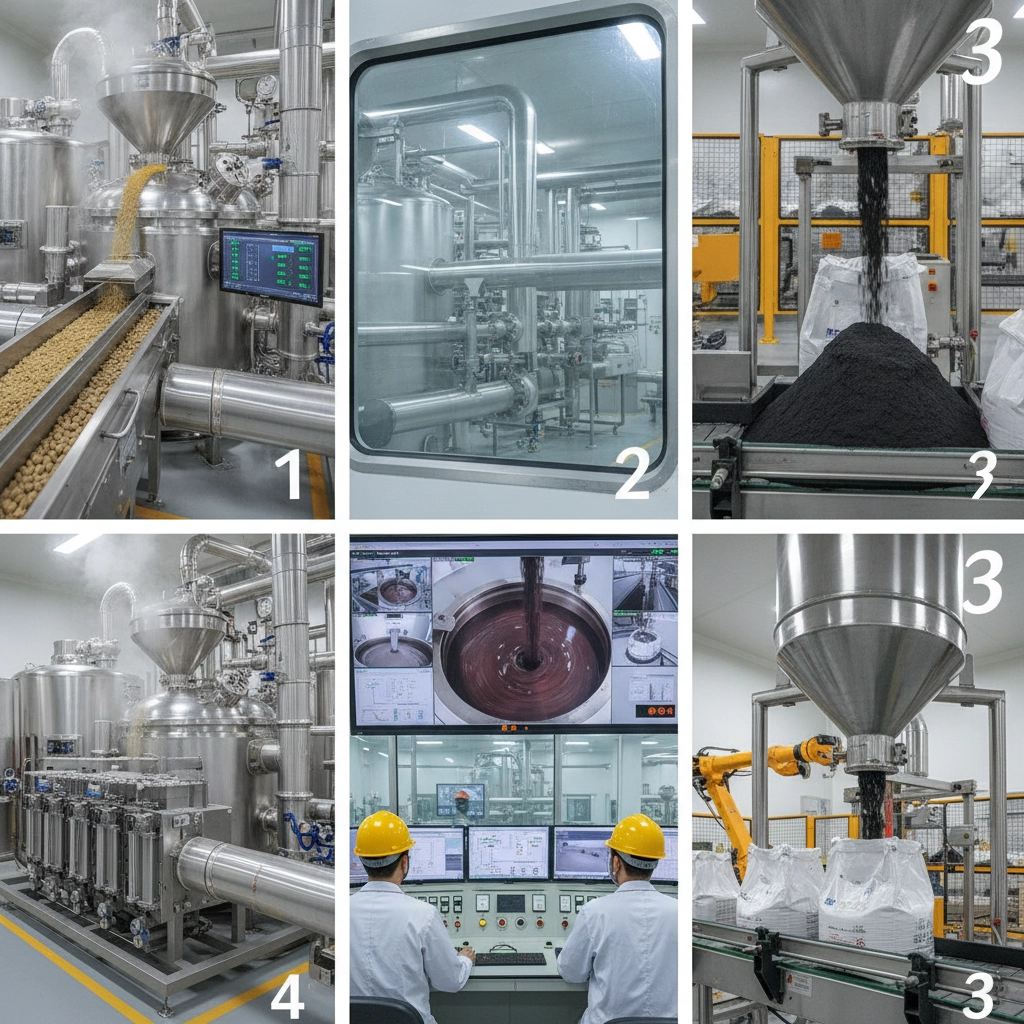
How Modern Enzymes Baking Industry Solutions Improve Bread Quality
How Modern Enzymes Baking Industry Solutions Improve Bread Quality
Revolutionizing Texture and Taste: Enzymes in the Baking Industry
In the modern culinary world, achieving the perfect balance of fluffiness, flavor, and shelf-life is both an art and a science. The integration of enzymes baking industry solutions has transformed how commercial bakeries produce high-quality bread and pastries. Unlike traditional chemical additives, enzymes are biological catalysts that optimize natural ingredients to improve dough handling and final product quality. From extending freshness to enhancing volume, these powerful proteins are the secret behind the world's most consistent bakery products. Understanding how these catalysts work is essential for any producer aiming for excellence in the competitive food market.

The Role of Amylases in Flour Processing
Amylases are perhaps the most critical components when discussing enzymes baking industry applications. These enzymes break down complex starches into simple sugars, which serve as the primary food source for yeast. This process not only accelerates the fermentation rate but also improves the golden-brown crust color through the Maillard reaction. By controlling the amount of fermentable sugar, bakers can ensure a consistent rise and a softer crumb structure. Without precise amylase activity, bread often suffers from a pale crust and a dense, heavy texture that lacks the desired mouthfeel.
Expert Insight: Alpha-amylase specifically targets the internal bonds of starch, while beta-amylase focuses on the ends, creating a synergistic effect that optimizes dough elasticity and gas retention.
How Xylanases Improve Dough Stability
Maintaining a stable dough is one of the biggest challenges in industrial baking. Xylanases act on the non-starch polysaccharides (hemicelluloses) in wheat flour, redistributing water more effectively throughout the dough matrix. This leads to improved dough viscosity and better machineability, reducing the likelihood of tearing during the mixing and shaping phases. For producers using enzymes baking industry standards, xylanases are indispensable for achieving a higher loaf volume and a more uniform pore distribution in the finished bread.
Comparing Enzyme Types in the Baking Industry
Not all enzymes serve the same purpose. While some focus on the initial rise, others are designed to prevent the bread from going stale. The choice of enzyme depends heavily on the type of product—be it a sourdough loaf, a brioche, or a commercial white bread. By implementing a strategic mix of enzymes baking industry catalysts, manufacturers can reduce their reliance on synthetic emulsifiers while maintaining a "clean label" for health-conscious consumers.
Extending Shelf-Life via Anti-Staling Enzymes
One of the most significant economic advantages of using enzymes baking industry technology is the prevention of retrogradation. Staling occurs when starch molecules realign and crystallize, making bread hard and dry. Maltogenic amylases are specifically used to modify the starch structure during baking, significantly slowing down this process. This allows products to remain soft for days longer without the need for excessive chemical preservatives, reducing food waste and increasing retail profitability.

Technical Specifications for Baking Enzyme Application
Implementing these catalysts requires precision. The temperature, pH level, and dosage must be strictly controlled to ensure the enzyme activates at the right moment and denatures (stops working) during the baking process. Over-dosage can lead to a sticky crumb, while under-dosage may result in poor volume. Below are the typical specifications for industrial-grade enzymes baking industry additives:
Conclusion: The Future of Baking with Biological Catalysts
The strategic application of enzymes baking industry solutions represents a shift toward more sustainable and efficient food production. By leveraging nature's own tools, bakeries can achieve superior volume, taste, and shelf-life while reducing the need for synthetic additives. As consumer demand for "clean label" products grows, the role of enzymes will only become more central to the industry. Investing in the right enzymatic blends ensures that every loaf produced is a masterpiece of texture and flavor.
Frequently Asked Questions (FAQs)
Are baking enzymes considered additives?
Technically, enzymes are processing aids rather than additives. This is because they perform their catalytic function during the dough preparation and baking process, but are deactivated by the high heat of the oven. Once the bread is baked, the enzymes are denatured and no longer active, meaning they often do not need to be listed as additives on the final ingredient label in many jurisdictions. This makes them ideal for "clean label" initiatives.
Can enzymes replace chemical emulsifiers?
Yes, in many cases, specific enzymes like lipases can replace traditional chemical emulsifiers. Lipases modify the fats naturally present in the flour to create phospholipids, which act as natural emulsifiers. This results in a similar improvement in crumb softness and volume without the need for synthetic DATEM or SSL. Many commercial bakeries are transitioning to these enzymatic alternatives to meet the growing consumer demand for natural ingredients.
How do enzymes affect the cost of production?
While the initial cost of high-quality enzymes may seem higher than some basic chemicals, they typically reduce overall production costs. This is achieved through increased efficiency: faster fermentation times, higher loaf volumes (more product per kg of flour), and significantly reduced waste due to extended shelf-life. When calculating the total return on investment, the precision and effectiveness of enzymes baking industry products usually lead to higher profit margins for the manufacturer.
Do enzymes change the nutritional value of bread?
Generally, enzymes do not negatively impact the nutritional profile of the bread. In fact, some enzymes can make the product more digestible by breaking down complex starches and proteins into simpler forms. Because they are used in very small quantities (ppm) and are destroyed during baking, they do not introduce foreign chemicals into the diet, maintaining the integrity of the wheat and water base of the bread.