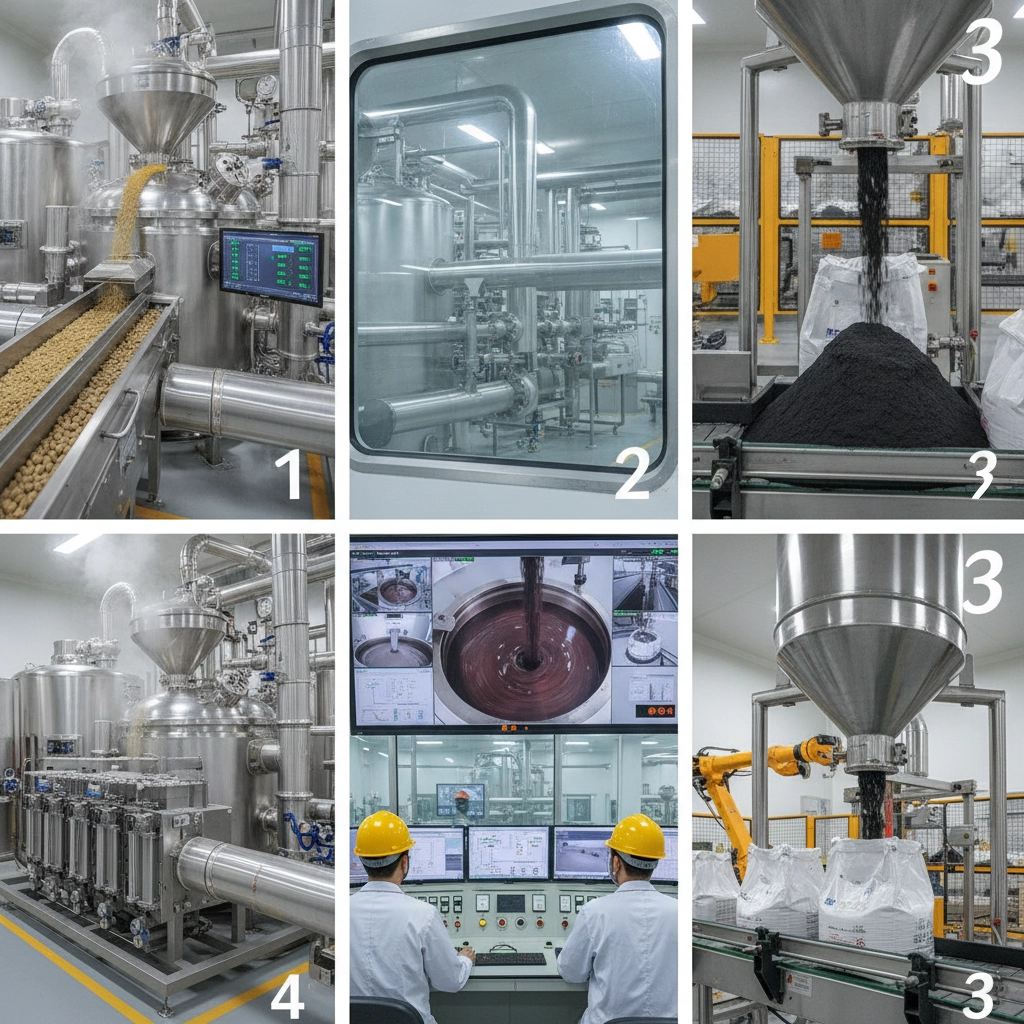
Optimizing Drug Synthesis with immobilized enzymes in pharmaceutical industry
Optimizing Drug Synthesis with immobilized enzymes in pharmaceutical industry
Optimizing Drug Synthesis with Immobilized Enzymes in Pharmaceutical Industry
In the modern quest for greener and more efficient drug manufacturing, the application of immobilized enzymes in pharmaceutical industry has emerged as a transformative technology. By anchoring biocatalysts to solid supports, pharmaceutical chemists can harness the extreme specificity of nature while overcoming the inherent fragility of free enzymes. This approach not only reduces chemical waste but also significantly lowers production costs by allowing the catalyst to be reused across multiple batches. From the synthesis of chiral intermediates to the production of complex antibiotics, immobilization is redefining the boundaries of biochemical engineering.

The Mechanism of Enzyme Immobilization
Enzyme immobilization involves the physical confinement or chemical bonding of enzyme molecules onto a solid matrix. This process prevents the enzyme from leaching into the final drug product, which is a critical requirement for regulatory compliance. The most common methods include adsorption, covalent bonding, and entrapment. When utilizing immobilized enzymes in pharmaceutical industry, the choice of support—such as silica, polymers, or metal-organic frameworks—determines the catalyst's stability and accessibility to substrates. This structural reinforcement protects the enzyme from harsh pH levels and temperature fluctuations often encountered during large-scale chemical synthesis.
Key Advantages of Using Immobilized Enzymes
The transition from soluble to immobilized biocatalysts offers several operational advantages. Primarily, the ease of separation allows for continuous flow processing, which is far more efficient than traditional batch processing. Furthermore, immobilization often enhances the thermal stability of the protein, extending its half-life and reducing the frequency of catalyst replacement. In the context of immobilized enzymes in pharmaceutical industry, this translates to a more consistent product purity and a streamlined downstream purification process, as there is no need to remove dissolved proteins from the final active pharmaceutical ingredient (API).
Operational Impact: Continuous flow reactors using immobilized catalysts can increase throughput by up to 40% while reducing solvent consumption by nearly 30% compared to traditional stir-tank reactors.
Comparison: Free vs. Immobilized Enzymes in Pharmaceutical Industry
To fully appreciate the value of immobilization, one must compare it with the use of free enzymes. While free enzymes often exhibit higher initial activity due to lack of steric hindrance, they are virtually impossible to recover and are prone to rapid denaturation. The use of immobilized enzymes in pharmaceutical industry provides a balance between activity and robustness, making the process economically viable for commercial drug production.
Practical Applications of Biocatalysis
The actual deployment of immobilized enzymes in pharmaceutical industry is most evident in the production of enantiopure drugs. Since many drug molecules are chiral, producing only the active isomer is vital for safety and efficacy. Lipases and proteases, when immobilized, are frequently used for the kinetic resolution of racemic mixtures. Additionally, immobilized glucose isomerase and various oxidoreductases are employed to synthesize intermediates for anti-inflammatory and anti-viral medications, ensuring high yield and minimal by-product formation.

Technical Specifications for Support Matrices
Selecting the right support material is the cornerstone of successful immobilization. The matrix must be chemically inert, mechanically strong, and possess a high surface area to maximize enzyme loading. For immobilized enzymes in pharmaceutical industry, biocompatible polymers and inorganic oxides are the preferred choices. Below are the common specifications for matrices used in industrial biocatalysis:
Conclusion: The Future of Sustainable Pharma
The integration of immobilized enzymes in pharmaceutical industry represents a critical shift toward "Green Chemistry." By combining the precision of biological catalysts with the durability of industrial materials, manufacturers can produce life-saving drugs with higher purity and lower environmental impact. As biotechnology continues to evolve, we can expect even more sophisticated immobilization techniques to further reduce the cost of medicine and enhance the sustainability of global healthcare supply chains.
Frequently Asked Questions (FAQs)
How does immobilization affect the activity of the enzyme?
Immobilization can affect enzyme activity in two primary ways. On one hand, it may slightly reduce the initial reaction rate due to steric hindrance (the support material blocking the active site) or diffusion limitations (the substrate taking longer to reach the enzyme). On the other hand, it often provides a stabilizing effect that prevents the enzyme from unfolding, which maintains activity over a much longer period compared to free enzymes. The goal is to optimize the support matrix to minimize activity loss while maximizing stability.
Which immobilization method is best for pharmaceutical production?
The "best" method depends on the specific enzyme and the drug being synthesized. Covalent bonding is generally preferred for high-value pharmaceuticals because it creates a strong link that prevents the enzyme from leaking into the product, ensuring high purity. However, for processes where enzyme activity must be preserved at all costs, entrapment or adsorption may be used, provided that the subsequent purification steps can handle any minor leaching. Many companies use a hybrid approach to balance stability and activity.
Can immobilized enzymes be used in continuous flow reactors?
Yes, this is one of the primary drivers for using immobilized enzymes in pharmaceutical industry. Because the enzymes are fixed to a solid support, they can be packed into a column (Packed Bed Reactor). The substrate solution is then pumped through the column, and the product emerges at the other end. This allows for continuous production, significantly increasing the space-time yield and reducing the need for labor-intensive batch turnovers.
What are the environmental benefits of this technology?
The environmental benefits are substantial. First, biocatalysts operate under mild conditions (lower temperatures and atmospheric pressure), which drastically reduces energy consumption. Second, the high specificity of enzymes eliminates the need for many toxic organic solvents and protects against the formation of unwanted by-products. Third, the ability to reuse the catalyst multiple times reduces the biological and chemical waste associated with enzyme production and disposal, aligning perfectly with the principles of sustainable chemistry.