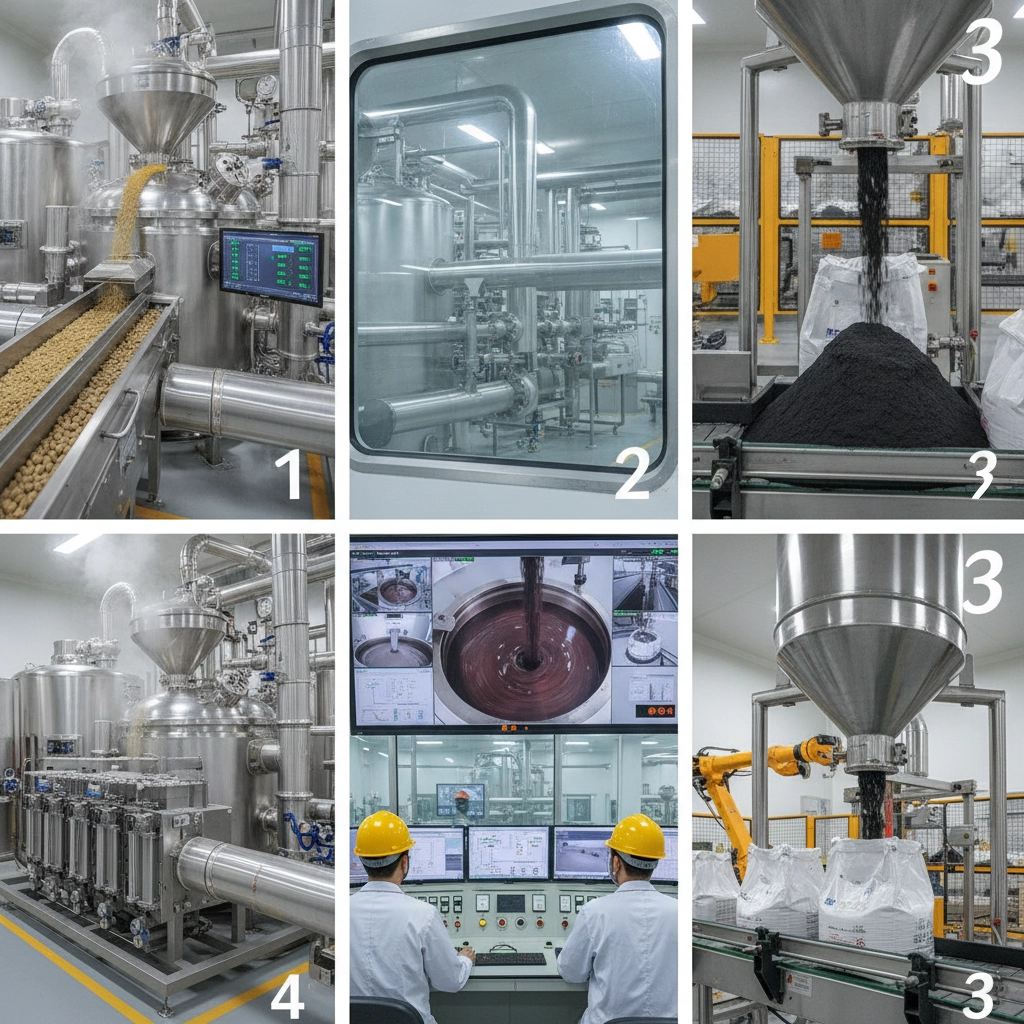
Understanding the Essential Enzymes Involved in Ethanol Production
Understanding the Essential Enzymes Involved in Ethanol Production
Understanding the Key Enzymes Involved in Ethanol Production
The global shift toward sustainable energy has placed bioethanol at the forefront of renewable fuel alternatives. At the heart of this biological transformation are the enzymes involved in ethanol production, which act as biological catalysts to break down complex organic materials into fermentable sugars. Whether deriving ethanol from simple corn starch or complex lignocellulosic biomass, the efficiency of the process depends entirely on the precision and stability of these enzymatic reactions. By optimizing these catalysts, industries can significantly increase yield and reduce the environmental footprint of fuel production.

The Role of Amylases in Starch Conversion
For first-generation ethanol, starch is the primary feedstock. The process begins with alpha-amylase, which randomly cleaves the internal alpha-1,4-glycosidic linkages of starch, effectively liquefying the thick starch paste. Following this, glucoamylase takes over to break down the resulting dextrins into individual glucose molecules. This sequential action is critical because yeast can only ferment simple sugars. Without these specific enzymes involved in ethanol production, the energy locked within starch would remain inaccessible, rendering the fermentation process impossible.
Industry Insight: The synergy between liquefaction (alpha-amylase) and saccharification (glucoamylase) determines the final glucose concentration, which directly impacts the overall ethanol titer.
Breaking Down Cellulose: Cellulase Complexes
Second-generation ethanol focuses on non-food biomass, such as agricultural residues. This requires a more complex set of enzymes involved in ethanol production known as the cellulase complex. This team of enzymes works in tandem: endoglucanases cut the cellulose chains internally, exoglucanases (cellobiohydrolases) clip cellobiose units from the ends, and beta-glucosidases finish the job by converting cellobiose into glucose. This rigorous process is essential for unlocking the sugar potential of wood and grass.

Comparing Enzyme Systems for Different Feedstocks
Different raw materials require distinct enzymatic strategies. While starch-based production is relatively straightforward and fast, cellulosic ethanol production is more challenging due to the crystalline structure of cellulose and the presence of lignin. Understanding the performance differences helps producers select the right enzymes involved in ethanol production to maximize their return on investment. The table below highlights the key differences in enzymatic requirements.
Hemicellulases and Accessory Enzymes
While cellulases handle the bulk of the biomass, hemicellulose—a branched polymer—requires its own set of enzymes involved in ethanol production. Xylanases and $\beta$-xylosidases are essential here to break down xylan into xylose. Additionally, pectinases and feruloyl esterases are often added as "accessory enzymes" to remove the "glue" holding plant cell walls together. This comprehensive enzymatic cocktail ensures that almost every single molecule of carbon in the plant matter is converted into sugar, maximizing the efficiency of the biorefinery.
Industrial Specifications for Production Enzymes
For industrial application, the purity and stability of enzymes are paramount. Factors such as pH tolerance and thermal stability determine whether an enzyme can survive the harsh conditions of a large-scale fermenter. When sourcing the enzymes involved in ethanol production, engineers look for specific activity units and stability profiles to ensure consistency across batches.
The Future of Enzyme Engineering in Biofuels
The next frontier for enzymes involved in ethanol production lies in genetic engineering and synthetic biology. Scientists are currently developing "thermostable" enzymes that can operate at higher temperatures, reducing the risk of microbial contamination and increasing reaction rates. Furthermore, the development of multi-functional enzyme cocktails allows for "consolidated bioprocessing" (CBP), where enzyme production, hydrolysis, and fermentation happen in a single vessel. This innovation promises to slash operational costs and make cellulosic ethanol economically competitive with petroleum-based fuels.
Conclusion: Optimizing Yield through Enzymatic Precision
The efficiency of bioethanol production is fundamentally a story of enzymatic precision. From the initial breakdown of starch by amylases to the complex dismantling of lignocellulose by cellulases and hemicellulases, these biological tools are the engines of the green energy transition. By selecting the high-quality enzymes involved in ethanol production and staying updated on engineering advancements, producers can ensure maximum sugar recovery and sustainable fuel output. The future of energy is biological, and enzymes are leading the way.
Frequently Asked Questions (FAQs)
Why are multiple enzymes needed for cellulosic ethanol?
Cellulose is a highly crystalline and complex polymer. No single enzyme can break it down efficiently. Endoglucanases create breaks in the internal chains, exoglucanases remove glucose units from the ends, and beta-glucosidases convert cellobiose into fermentable glucose. This synergistic approach is necessary to completely dismantle the robust structure of plant cell walls and maximize the glucose yield for fermentation.
How does temperature affect the enzymes involved in ethanol production?
Enzymes are proteins and are highly sensitive to temperature. Each enzyme has an optimal temperature where its activity is peaked. If the temperature is too low, the reaction rate is sluggish. If it is too high, the enzyme undergoes denaturation—meaning its 3D structure unfolds and it loses its catalytic ability. This is why industrial processes strictly control heat, often using thermostable variants of amylase during the initial liquefaction phase.
What is the difference between 1G and 2G ethanol enzymes?
1G (First Generation) ethanol uses food-based starch (corn, sugar cane), requiring relatively simple enzymes like amylases to reach glucose. 2G (Second Generation) ethanol uses non-food lignocellulosic biomass (straw, wood), requiring a much more complex and expensive cocktail of cellulases and hemicellulases to break through the lignin and cellulose barriers. 2G enzymes are generally more specialized and required in higher dosages to achieve efficient conversion.
Can enzymes be reused in ethanol production?
In traditional "free enzyme" systems, enzymes are lost in the mash and cannot be easily recovered. However, modern biotechnology is moving toward "enzyme immobilization," where enzymes involved in ethanol production are attached to a solid support. This allows the enzymes to be recovered and reused for multiple cycles, significantly reducing the cost of the production process and increasing overall operational efficiency.